
Abstract: To be updated

Areas of Expertise: Graph Machine Learning, Mobile Computing, Blockchain, and Big Data Analytics
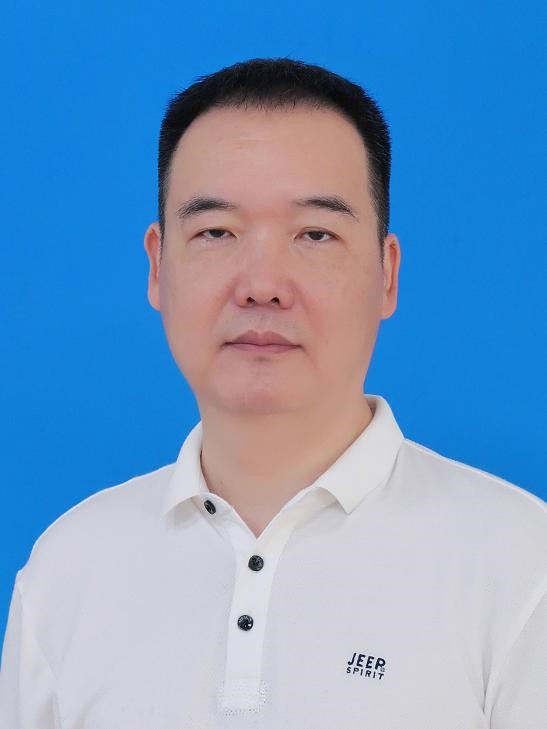
Brief Introduction: Fang Hu received her Ph.D. in 2015 from the School of Computers, Central China Normal University, Wuhan, China. Dr. Hu worked at the University of West Florida as a postdoctoral researcher in the Department of Mathematics and Statistics during 2018-2019. Dr. Hu is currently a Full Professor at the College of Information Engineering, Hubei University of Chinese Medicine. She is an IEEE Senior Member, a China Computer Federation (CCF) Senior Member, the Website Chair of the IEEE Computer Society Big Data STC, the Executive Committee of the China Computer Federation (CCF) on Pervasive Computing, the Communication Committee of the Chinese Institute of Electronics' Youth Professional Technical Committee of the Internet of Things, etc. She is a Guest Editor or Reviewer for over 80 SCI journals, such as IEEE Transactions on Network Science and Engineering, IEEE Systems Journal, etc. She is a Technical Program Committee and Program Committee for over 10 international conferences, such as EIIE, ISHCI, ICMIC, ISAIR, ICBSB, ICPMS, etc. She served as a keynote speaker at ICPHMS 2021, EEIE 2022, ICITBT 2022, MCCE 2023, EEIE 2023, ICMIC 2023, EEIT 2023, etc. As the first or corresponding author, she has published over 40 prestigious conference and journal articles, including over 20 SCI-indexed and over 10 EI-indexed papers.Abstract: To be updated
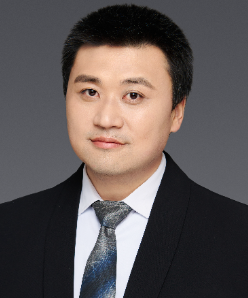
Brief Introduction: Hui Liu is Jiangsu Provincially Distinguished Professor at the School of Artificial Intelligence / Future Technology, Nanjing University of Information Science and Technology (NUIST). He is ranked among the top 2% of scientists worldwide by Stanford and placed within the global top 0.05% by ScholarGPS—where he ranks 10th globally in the field of Human Behavior. He serves as Chief Scientist at Guodian Nanjing Automation Co., Ltd. (GDNZ); Chair Professor (by invitation) at the College of Arts, Xi'an University of Architecture and Technology (XAUAT); Guest Professor at the HFU International Institute, Hochschule Osnabrück (Germany); and Researcher at the University of Bremen, Germany. His international academic engagement includes appointments as an Erasmus+ Scholar, recipient of a Mobile Teaching Grant, and selection as a Young European Research Universities Network (YERUN) Scholar with a Mobile Research Award. He was co-responsible for four multi-institutional, nationally and industrially funded German research projects. He pioneered the first intelligent knee bandage capable of real-time human activity recognition, recognized with the Best Paper Award (student author) at BIODEVICES 2019. A subsequent co-authored study on EMG-based facial action unit recognition received the Best Paper Award at BIODEVICES 2025. He has authored or edited over 125 peer-reviewed publications. Eleven of his journal articles are designated ESI Highly Cited Papers (top 1%), including eight Hot Papers (top 0.1%). He has delivered plenary or keynote talks, or served as chairs at more than 20 major international conferences and currently serves as Editor-in-Chief of the Journal of Engineering Research and Sciences, alongside editorial board memberships in multiple SCI journals. Prof Liu's scholarly service and industrial impact have been acknowledged through the Sensors 2023 Outstanding Reviewer Award, the CAMPUSiDEEN Public Choice Award for Smart Sensing and Recognition Technology (2022), and the Fifth Prize in the Hangzhou Innovation & Entrepreneurship Competition for Overseas Talents (2025).
Abstract: To be updated
Copyright © 2027 IEEE 4th International Conference on Energy and Electrical Engineering

 Qingdao, China